Goofy Ahh Name Meaning and Funny Name Ideas 2026
A goofy ahh name is an online slang way to describe a name that sounds unusually funny, awkward, over-the-top, or unexpected. The phrase is usually playful rather than literal. It can refer to a real first name, a fictional character name, a username, or a made-up label such as “Professor Pickleboots.”
“Ahh” is a stylized spelling often used online in place of “ass.” It became common in meme language partly because it softens profanity and gives a joke a deliberately exaggerated, casual tone. Whether a goofy name is funny or rude depends heavily on context and who is being joked about.
What does “goofy ahh name” mean?
It means a name that someone finds comically strange or silly. The phrase is a teasing reaction, often used in captions, comments, gaming chats, and short videos. It does not describe a formal category of names.
For example, someone might say, “That is a goofy ahh name for a spaceship,” after hearing a fictional name like “The Crusty Comet.” The joke is about the dramatic or absurd sound of the name, not about a real person’s worth.
Breaking down the phrase
| Part | Meaning in this context |
|---|---|
| Goofy | Silly, amusing, odd, or clumsy in a harmless way. |
| Ahh | Internet slang used as a softened, stylized substitute for “ass.” |
| Name | A person’s name, nickname, username, pet name, character name, or invented title. |
Together, the phrase adds comic emphasis. Saying “goofy name” is fairly mild. Adding “ahh” makes it sound more like a meme-style punchline.
How “ahh” became part of meme slang
Online slang often changes spellings to create a certain voice. “Ahh” can make a phrase look less direct, more exaggerated, or more suitable for a playful comment. Similar meme phrasing may attach it to an adjective: “goofy ahh,” “weird ahh,” or “dramatic ahh.”
The spelling is not standard English, and it is not usually meant to be read as a separate word with a precise dictionary definition. Its function is tone. It signals that the speaker is making a joking, informal reaction.
Usage can vary by platform, age group, and community. In some spaces it is clearly lighthearted; in others, it can sound dismissive or insulting. Reading the room matters more than copying a phrase because it is popular.
When it is funny and when it can be hurtful
A goofy ahh name joke works best when the name is fictional, self-chosen, or shared by friends who are comfortable with that kind of humor. A made-up gamer tag, a pet nickname, or a character in a comedy story gives everyone room to laugh.
It can land badly when it targets someone’s real given name, especially a name connected to their family, language, religion, or culture. Many names may sound unfamiliar only because the listener has not encountered them before. Unfamiliar is not the same as silly.
A simple rule helps: joke about the situation or an invented name, not a person’s identity. If the person does not seem amused, drop the joke rather than explaining why it should be funny.
Funny goofy ahh name ideas
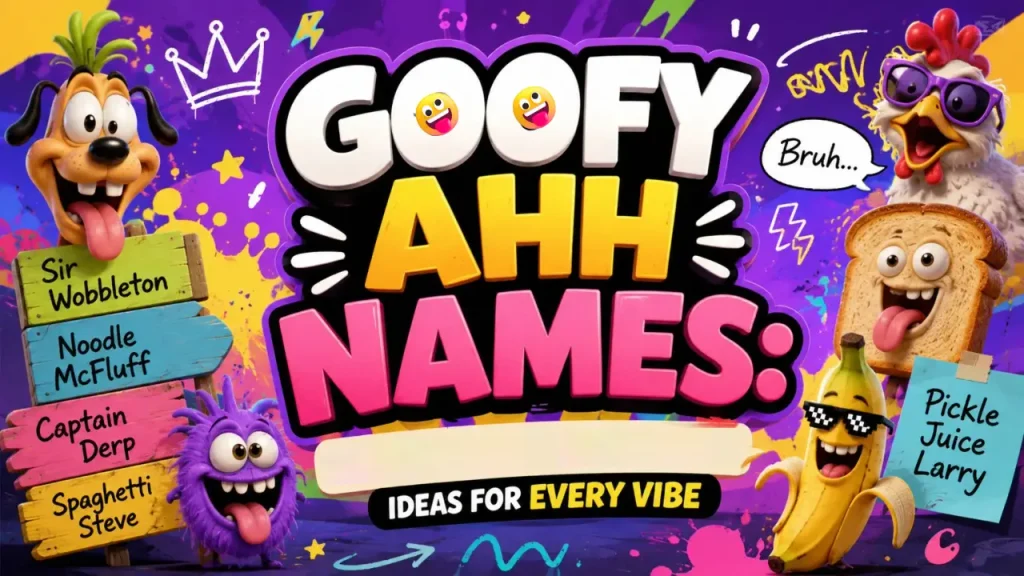
Invented names are a safer place for absurd humor. The best ones usually combine an ordinary name with an object, a grand title, or an unexpected detail. They should sound intentionally ridiculous without copying or mocking a real culture or group.
Food-inspired names
- Sir Waffleton the Third
- Captain Noodlebeard
- Baron von Biscuit
- Pickle McSprinkle
- Dr. Toastington
- Lady Ravioli
- Cheddar Thunder
Overly serious names for silly characters
- Lord Reginald Footstool
- Professor Wigglesworth
- Admiral Crumblepants
- Duke Bumbersnatch
- Commander Snorfle
- Count Pancake the Brave
- Mayor Boopington
Names for games, group chats, or pets
- Turbo Grandpa
- Moon Cheese
- Bean Wizard
- Keyboard Goblin
- Soup Detective
- Chairman Meow
- Potato Supreme
Before using a name in a public profile, consider the platform’s rules and who may see it. A joke that works among close friends may not fit a school, workplace, or public community.
How to create a goofy name that actually sounds good
A funny name often has a recognizable pattern. It should be easy to say, short enough to remember, and surprising enough to make the reader pause.
- Start with a normal base. Choose a first name, title, animal, object, or role: Captain, Grandma, Wizard, Kevin, toaster, pigeon.
- Add an unexpected second part. Pair it with something that does not normally belong there, such as “Pigeon” and “Taxman” or “Wizard” and “Socks.”
- Use sound for comic effect. Alliteration and bouncy syllables help: “Bobby Bananaboots” is easier to remember than a long, random string of words.
- Match the setting. A fantasy character can have a grand title, while a gaming nickname may work better as two quick words.
- Keep it kind. Avoid jokes based on real names, disabilities, ethnicities, religions, accents, or personal appearance.
For instance, “Sir Crouton McFlap” has a title, a food word, and a nonsense action word. The combination is odd but easy to picture, which is often the whole joke.
Goofy names versus unusual real names
An unusual name is not automatically a goofy one. Real names come from many languages, histories, and family traditions. A name that is uncommon in one place may be ordinary somewhere else.
The phrase is most accurate for clearly invented or deliberately comic names. Calling a classmate’s, coworker’s, or stranger’s actual name “goofy” can turn a casual joke into mockery. If you are unsure, use the term for fictional characters, pets, objects, and usernames instead.
Examples of natural usage
These examples show the usual playful tone:
- “My racing game car has a goofy ahh name: The Turbo Turnip.”
- “We need a goofy ahh name for our group chat.”
- “That villain is called Lord Spatula? What a goofy ahh name.”
- “I gave my houseplant a goofy name: Fernie Sanders.”
The phrase is less appropriate when it is aimed directly at a person: “You have a goofy ahh name.” Even when meant as a joke, that wording can feel personal. A better approach is to compliment the name or ask how it is pronounced.
Less harsh alternatives
If you want the same light comic feeling without slang that may sound insulting, try one of these:
- funny name
- silly name
- wild name
- ridiculous character name
- over-the-top username
- delightfully weird nickname
- cartoonish name
These alternatives can be especially useful in mixed-age groups, classrooms, public posts, or conversations with people you do not know well.
Frequently asked questions
Is “goofy ahh” a bad word?
It is informal slang that alludes to profanity, though the altered spelling is often used to soften it. Some people will see it as harmless meme language, while others may still find it crude. Use it with awareness of the setting.
What makes a name goofy?
A name may seem goofy because it has an unexpected word pairing, a dramatic title, funny sounds, or an intentionally absurd image. Humor is subjective, so a name is funniest when it is clearly fictional or self-chosen.
Can I use a goofy name as a username?
Yes, as long as it follows the platform’s rules and does not impersonate, harass, or target someone. Pick something easy to spell if friends need to find you.
Is it okay to call someone’s real name goofy?
Usually, it is better not to. A real name can carry cultural and family meaning, and a joke may come across as disrespectful. Save the phrase for made-up names or friends who have clearly invited that kind of teasing.
Why do funny names often use titles like “Sir” or “Professor”?
Grand titles create contrast when paired with something ordinary or silly. “Professor Pickles” sounds amusing because the formal title and the casual food word do not normally go together.
A quick takeaway
A goofy ahh name is meme slang for a name that sounds amusingly silly or strange. It is best used for fictional characters, pets, playful usernames, and shared jokes—not to put down someone’s real name. The funniest made-up names are easy to say, unexpected, and harmless.